
How Skills, Support, and Smart Farming Are Transforming Lives
Cassava is more than just a crop in Ogoni land; it is food, income, and a way of life. From garri to fufu, cassava feeds families and sustains communities across Eleme, Gokana, Khana, and Tai in Rivers State. Yet, despite Ogoni being one of the highest cassava-producing areas in the state, many farmers still face low productivity and limited access to modern farming knowledge.
To change this story, a strategic agricultural intervention was introduced to equip farmers with the skills, tools, and confidence needed to farm better, earn more, and strengthen food security.
The Idea Behind the Agri-Skilling Project
The Agri-Skill Enhancement and Empowerment of Ogoni Cassava Farmers for Food Security project was implemented by the Hydrocarbon Pollution Remediation Project (HYPREP) through its Centre of Excellence for Environmental Restoration (CEER).
The project aligns with the Federal Government’s National Agricultural Growth Scheme and Agro-Pocket (NAGS-AP), designed to address challenges across key agricultural value chains in Nigeria. In Ogoni, cassava was chosen because of its importance as a staple food and its strong economic potential.
With food security now a key performance indicator for HYPREP, the project focused on providing climate-smart, sustainable, and business-oriented agricultural skills to smallholder cassava farmers.
Why Cassava Farming Matters in Ogoni
Ogoni is widely known for producing high-quality cassava and garri. However, much of the farming is still done at small scale, with limited access to improved planting materials, fertilizers, and market information. By strengthening the cassava value chain, the project aims to help farmers move from subsistence farming to profitable agribusiness while improving food availability across the region.
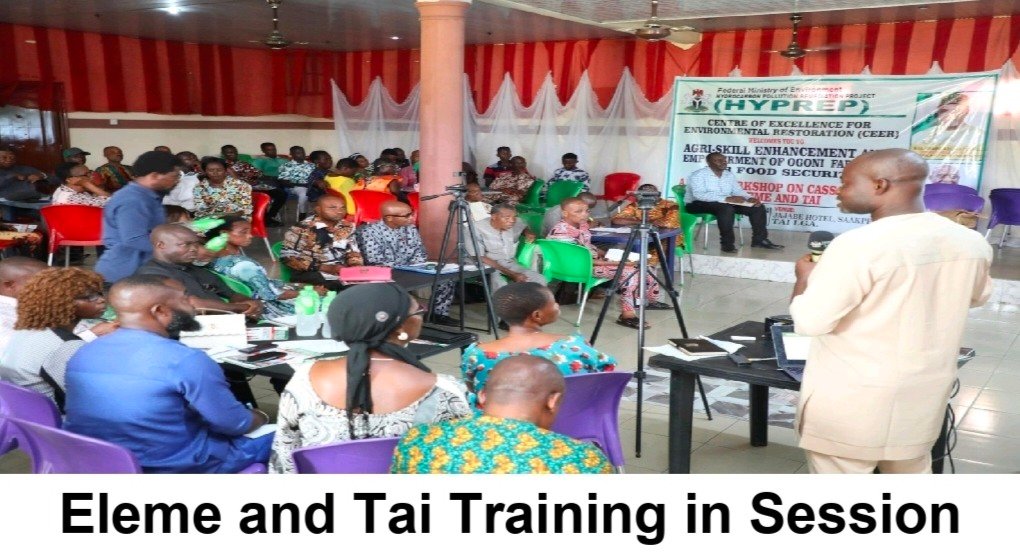
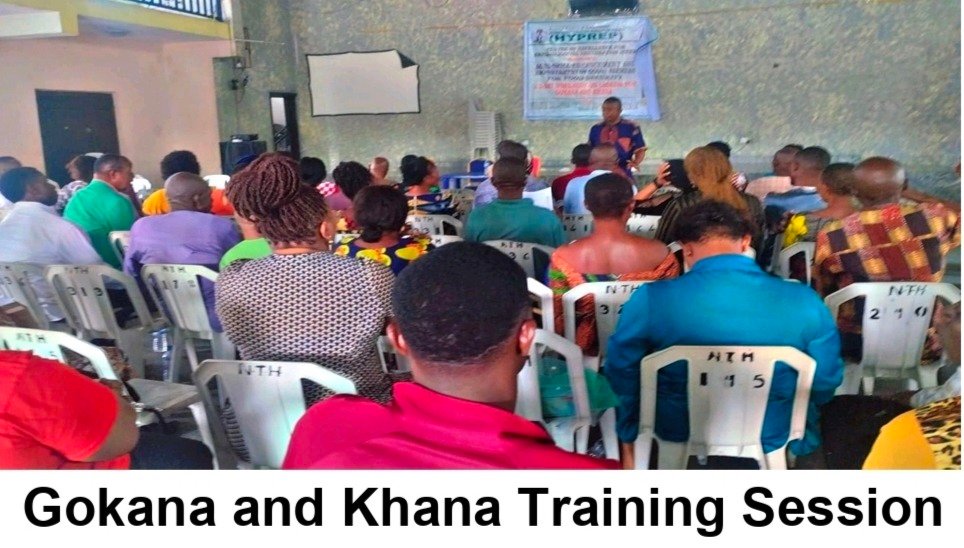
Hands-On Training Across Four LGAs
Between 17th and 31st December 2024, four intensive two-day training workshops were organized across the four Ogoni Local Government Areas. Although 200 farmers were initially targeted, 201 cassava farmers successfully participated in the programme.
The training sessions were practical and interactive, covering key topics such as:
- Best practices in cassava farming.
- Cassava value chain mapping and development.
- Running cassava farming as a profitable business.
- Producing cassava for market access.
- Correct planting methods and timing for higher yields.
- Fertilizer application and use of improved cassava varieties.
- Cassava cultivation for seed production and input supply.
These sessions helped farmers understand that cassava farming can be both sustainable and profitable.
Starter Packs to Support Immediate Action
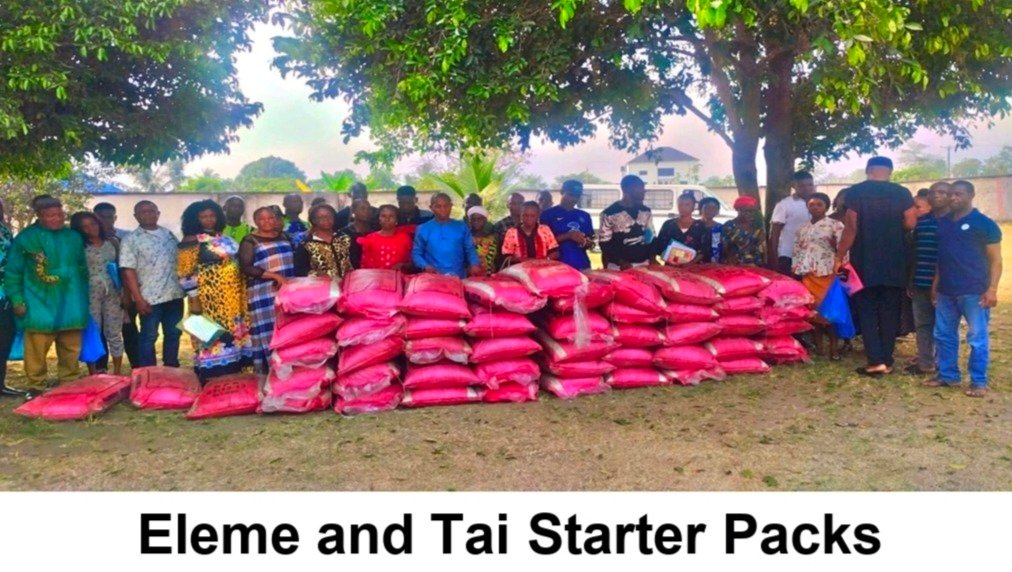
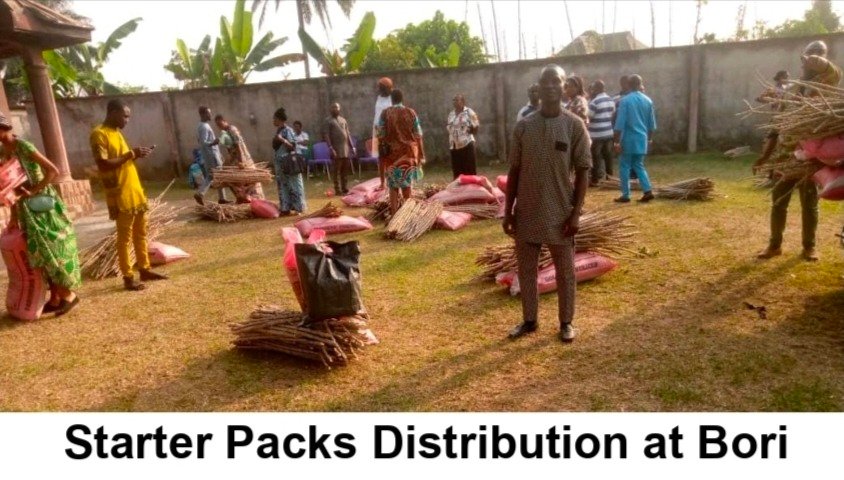
To ensure farmers could immediately apply what they learned, each participant received a starter pack at the end of the training. This included:
- Two bundles of improved cassava stems sourced from IITA, Ibadan.
- One 50kg bag of NPK fertilizer (27:13:13).
- Support for basic farm tools and agrochemicals.
Beyond serving as farming inputs, these starter packs were designed as a practical bridge between knowledge and action. By providing improved planting materials and essential inputs, the project removed one of the biggest barriers farmers face after training – the lack of capital to implement new techniques. This approach ensured that learning did not end in the classroom but continued directly on the farm.
In total, 402 cassava bundles and 201 bags of fertilizer were distributed, directly boosting farmers’ capacity to improve productivity. The immediate availability of these inputs encouraged early adoption of best practices, improved crop establishment, and increased confidence among famers to scale up their cassava production using modern, climate-smart methods.
Early Results and Positive Outcomes
The impact of the agri-skilling programme has already been encouraging. Key outcomes include:
- Increased motivation among farmers to register with the Nigeria Cassava Growers Association (NCGA).
- Improved awareness of cassava farming as an agribusiness.
- Greater willingness to form cooperatives for better market access.
- Stronger collaboration among cassava value chain actors.
Long-Term Impact and Sustainability
The project is expected to lead to:
- Increased cassava productivity and efficiency.
- Job and wealth creation within Ogoni communities.
- Reduces unemployment through agribusiness opportunities.
HYPREP also plans to expand the initiative through partnerships with national and international organizations, as well as train-the-trainer programmes, to ensure long-term sustainability and wider impact.
Women and Youth Leading the Way
The project revealed strong participation by women, who make up a larger proportion of registered cassava farmers in Ogoni. Youths were also actively involved, reinforcing the project’s focus on inclusive growth and community development. By supporting women and young farmers, the initiative strengthens household income and promotes long-term agricultural sustainability.
Building a Stronger Food System for Ogoni
The Agri-Skill Enhancement and Empowerment project demonstrates how targeted training, quality inputs, and farmer support can transform local agriculture. By investing in Ogoni cassava farmers, HYPREP is not only improving livelihoods but also strengthening food security and economic resilience across Rivers State. One farmer, one field, one harvest at a time, the future of food security in Ogoni is taking root.